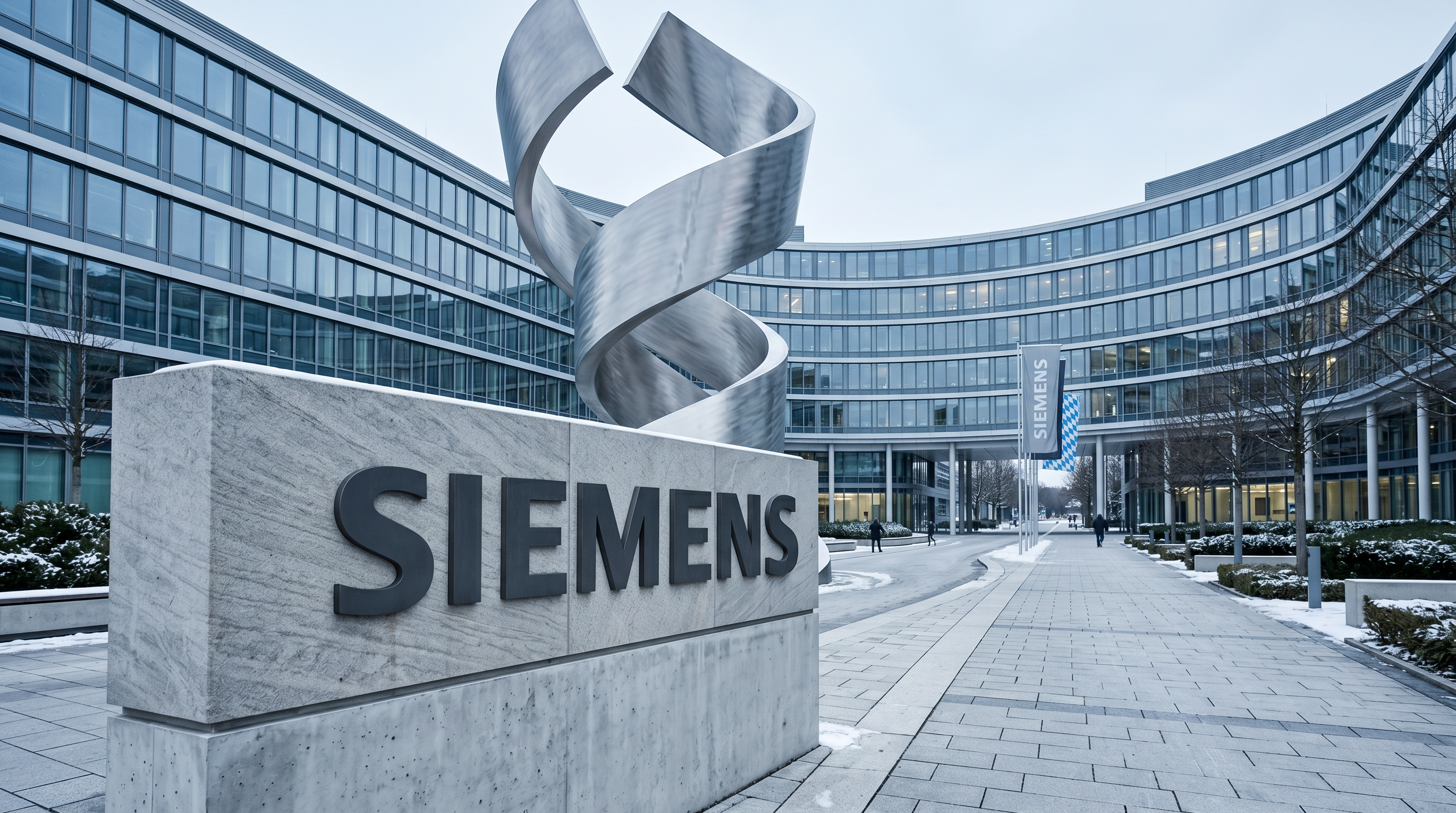
Siemens factory operations
Siemens

How Siemens Achieved a 52% Increase in Completed OLTs and Eliminated Repeated Incidents Across 6 Global Manufacturing Sites

A 90-Day Learning Teams Pilot That Turned Frontline Knowledge Into Measurable Operational Improvement Across 318,000 Employees in 200 Countries

52%

More OLTs completed

4x

Frontline participation

71%

Actions closed on time

Zero

Repeated incidents in pilot sites

Client Profile

One of the world's largest industrial technology companies

Founded in Berlin in 1847, Siemens AG operates across 200+ countries with 318,000 employees and €78.9B in revenue for FY 2025. Its manufacturing division spans hundreds of production facilities serving energy, transport, and defence.

Despite investing heavily in digital transformation, one asset remained untapped: the knowledge held by frontline workers - not being captured, shared, or converted into lasting improvement.

Founded:

1847, Berlin

Employees:

318,000 globally

Revenue:

€78.9B (FY 2025)

Countries:

200+

Pilot sites:

6 manufacturing facilities

Locations:

Germany, UK, United States

Duration:

90 days

The Challenge

"The same production errors, the same near-misses, and the same process gaps - across facilities that had no awareness of each other's problems."

Siemens had invested heavily in process documentation, safety systems, and digital infrastructure. Standard operating procedures existed for every line. Incident reporting tools were in place. But the organisation kept encountering the same production errors, the same near-misses, and the same process gaps across facilities that had no awareness of each other's problems.

Four specific challenges were limiting operational learning across the manufacturing network:

1

Production knowledge remained confined to the factory floor

Workers on Siemens production lines operated complex automated systems every day. They knew exactly which calibration settings changed during a load. They also knew which assembly steps were often skipped under time pressure, and which machine behaviors preceded quality defects. But there was no way for all this knowledge to be released. Siemens had no systematic system to capture, document, or process this knowledge at the company level.

2

Facilities in different countries were learning differently

With manufacturing sites spread across Germany, the UK, the US and elsewhere, each facility was working on its own improvement methodology. Some sites had informal shift debriefs, while most did not. A recurring calibration problem at the Erlangen plant was not visible to the Swindon team three months later, which was dealing with the same problem. Geographical distance turned the knowledge of individual sites into institutional blindness.

3

Improvement initiatives disappeared as soon as the meeting ended

When production problems arose at Siemens facilities, the initiatives were recorded in meeting minutes and shared via email. But there was no live tracking system, no automatic reminders, and no clear escalation path for delayed tasks. Plant managers spent a lot of time each week chasing the progress of tasks that should have been completed automatically. Many initiatives remained open for months, and the problems they were designed to solve continued to creep in.

4

Quality and safety signals were slow to reach leadership

Siemens' site performance data was compiled in monthly and quarterly reports. By the time a pattern of recurring defects became apparent to leadership, it had already spread to multiple sites and hurt the business in the form of production disruptions and quality rejections. There was no system in place to detect drift in real time or to correlate weak signals from different facilities before they escalated into major operational problems.

The Solution

A 3-phase OLT model that worked identically across Stuttgart, Swindon, and Sacramento

Siemens launched a 90-day pilot of Learning Teams at six of its high-volume manufacturing facilities. The pilot included facilities in Germany, the UK, and the US. Facilitators completed a guided onboarding and were running their first operational learning teams within just two weeks of setup.

The platform integrated directly into existing shift schedules, without requiring additional resources or extended work hours. Three key capabilities completely transformed the way learning was delivered at the pilot sites:

Phase 1 - Learn

Structured two-hour OLT sessions

Workers across shifts and time zones participated on-site or remotely. Each session followed a built-in flow from observations to systemic factors. Night-shift operators in Stuttgart contributed structured insights identical to day-shift workers - for the first time ever.

Phase 2 - Soak

Overnight async reflection

After each session, workers added asynchronous observations before the next phase. Three separate workers independently flagged the same equipment issue during a soak period - transforming an individual concern into an undeniable systemic signal.

Phase 3 - Improve and Action

Actions with owners and deadlines

Every action was assigned an owner and deadline inside the platform during the session. Supervisors had a live view of all open actions across all six sites - no status emails, no manual updates, automatic overdue notifications.

AI-powered pattern icon

AI-powered pattern detection

The AI engine surfaced a pattern of calibration drift across four OLT sessions in three countries. Engineering acted on the unified root cause within a week. No incidents followed.

The Results

Measurable improvement across every tracked indicator

Within 90 days, Siemens recorded consistent and measurable improvements in all indicators tracked in the pilot. This improvement came neither from increasing staff numbers nor from increasing production hours. The real difference was made by the platform, which removed structural barriers that prevented operational learning from being effectively implemented across a globally distributed workforce.

52%

More OLTs completed vs. prior 90-day period

4x

Increase in frontline participation

71%

Of improvement actions closed on time

31

Cross-site risk themes identified by AI

2 wks

From onboarding to first completed OLT

Zero

Repeated incidents at pilot facilities in final 5 weeks

Why it worked

The method that was always missing

Siemens already had world-class manufacturing processes, advanced digital systems, and a real commitment to continuous improvement. But what was missing was a systematic way to extract and act on the information its 318,000 employees generated every day.

Checklist tick

Consistent process across geographies. The 3-phase OLT model worked identically in Stuttgart, Swindon, and Sacramento - removing variation in how learning happened.

Checklist tick

Remote capability eliminated barriers. Night-shift operators and previously excluded voices contributed structured insights without travel or schedule disruption.

Checklist tick

AI turned local signals into global intelligence. Observations that would never have been correlated manually became a unified systemic insight - triggering action before an incident occurred.

Checklist tick

From reactive to proactive. Siemens stopped learning from failures and started learning from everyday work - a shift visible within the first month.

What the Team Said

Siemens

Plant Operations Director

Siemens Digital Industries

Rating star Rating star Rating star Rating star Rating star

“Our manufacturing teams had always known where the risks were. They just had no reliable channel to communicate them in a way that reached the right people. LearningTeams.tech changed that. Within six weeks, we were acting on systemic issues that had been invisible to leadership for years.”

Siemens

EHS Facilitator

Siemens Smart Infrastructure, UK

Rating star Rating star Rating star Rating star Rating star

“We completed more structured learning sessions in three months than we had in the previous eighteen months combined. The remote OLT capability made the biggest difference. Shift workers who had never been included in improvement conversations were now contributing every single week.”

Ready to Turn Your Frontline Knowledge Into a Competitive Advantage?

Learning Teams is specifically designed for manufacturing and industrial organizations that are already investing in safety and quality, but still struggle to translate daily frontline knowledge into continuous operational improvement.

Empowering Insights, Driving Excellence: Transforming Work with Operational Learning.

Facebook Instagram X (Twitter) LinkedIn YouTube

Industries

Resources

Company

Contact us

Location 5th Floor 167–169 Great Portland St,
London W1W 5PF, UK

Copyright © 2026 Learningteams™. All Rights Reserved.